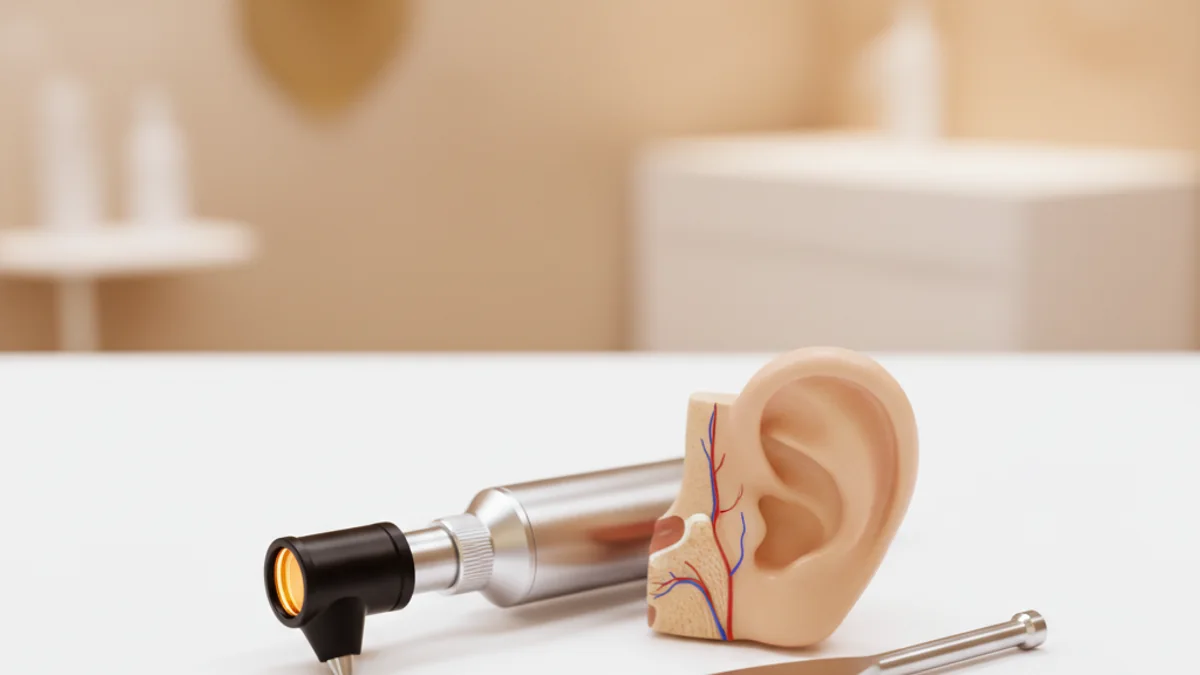
Ear cancer, a rare but serious malignancy arising from the external ear, ear canal, or temporal bone, is frequently misdiagnosed as chronic ear infection, delaying treatment by months or even years. When cancer penetrates the temporal bone, it enters one of the most anatomically complex regions in the human body, surrounded by the brain, major blood vessels, the facial nerve, and the inner ear. Successful treatment demands a surgeon with specific skull base expertise, a capability that few head and neck centres offer in India. At THANC Hospital in Chennai, Dr. Vidhyadharan Sivakumar brings dedicated skull base training across three countries, Canada (Toronto General Hospital), Australia (Royal Adelaide Hospital), and India (Amrita Institute of Medical Sciences), to every ear cancer case, offering the full range of surgical approaches from pinna excision to lateral and subtotal temporal bone resection with microvascular reconstruction.
Understanding Ear Cancer
The ear is anatomically divided into three parts: the external ear (pinna and ear canal), the middle ear (containing the ossicles and tympanic membrane), and the inner ear (cochlea and vestibular apparatus). Malignancies can arise from any of these structures, though the pinna and ear canal are the most common sites.
Ear cancer is genuinely rare, accounting for less than 1% of all head and neck cancers, with an estimated incidence of approximately 1-6 per million population per year globally. This rarity means that few surgeons accumulate significant personal experience with these tumours. Most cases are best managed at high-volume head and neck cancer centres where skull base expertise, multidisciplinary support, and reconstructive capability are concentrated.
India's burden of ear cancer is shaped by two patterns. Pinna cancers driven by chronic sun exposure are more common in outdoor workers and farmers. Ear canal and temporal bone cancers are often linked to chronic suppurative otitis media, endemic in India due to limited otological care access in rural areas. Chronic ear disease affects approximately 5-6% of the Indian population, creating a substantial at-risk pool for ear canal malignancy.
The temporal bone is a uniquely challenging surgical territory. It houses the internal carotid artery, the sigmoid sinus, the facial nerve controlling facial movement, the cochlea for hearing, and the vestibular apparatus for balance. Surgery in this region requires millimetre-level precision to achieve oncologic clearance while minimising damage to these vital structures. For a broader perspective on how modern treatment advances are improving outcomes across head and neck cancers, read our guide on head and neck cancer survival rates and modern treatment.
Types and Classification
Different types of ear cancer carry distinct biological behaviour and treatment implications:
Squamous cell carcinoma (SCC) is the most common malignancy of the ear canal and temporal bone, accounting for 60-80% of cases. It is frequently associated with chronic otitis media. SCC of the pinna is related to chronic sun exposure and tends to present earlier due to its visible location.
Basal cell carcinoma (BCC) is the most common cancer of the pinna, driven by ultraviolet radiation exposure. It is locally invasive but rarely metastasises, and prognosis is excellent with adequate surgical excision.
Melanoma arises on the sun-exposed skin of the pinna. Ear melanoma requires wide excision with sentinel node biopsy or neck dissection based on Breslow thickness and carries prognosis similar to melanoma at other head and neck sites.
Ceruminous adenocarcinoma and adenoid cystic carcinoma are rare ear canal tumours. Adenoid cystic carcinoma is notable for perineural spread, which can lead to facial nerve involvement and late distant relapse. Rhabdomyosarcoma can occur in the ear in children, requiring multimodal treatment.
Staging follows the modified Pittsburgh system specific to temporal bone cancers:
| Stage | Extent of Disease | Facial Nerve Status | Typical Surgical Approach | 5-Year Survival |
|---|---|---|---|---|
| T1 | Tumour limited to external auditory canal, no bony erosion | Intact | Lateral temporal bone resection | ~80-85% |
| T2 | Limited bony erosion of ear canal or limited middle ear involvement | Usually intact | Lateral temporal bone resection | ~60-70% |
| T3 | Full-thickness canal erosion, middle ear involvement, or facial nerve invasion | May be involved | Subtotal temporal bone resection | ~35-50% |
| T4 | Invasion of cochlea, petrous apex, carotid canal, dura, or brain | Often involved | Subtotal/total temporal bone resection | ~15-30% |
Causes and Risk Factors
The causes of ear cancer vary by location, with several India-specific considerations:
Pinna (external ear) cancers:
- Chronic sun exposure: the primary risk factor. The pinna is one of the most sun-exposed parts of the body, and cumulative UV damage over decades leads to squamous cell carcinoma, basal cell carcinoma, and melanoma. In India, outdoor workers, farmers, and fishermen face elevated risk despite darker skin phototypes.
- Previous radiation therapy to the head and neck region elevates the risk of secondary malignancies including ear cancer.
- Immunosuppression: organ transplant recipients and HIV-positive individuals face increased skin cancer risk on the ear.
Ear canal and temporal bone cancers:
- Chronic suppurative otitis media (CSOM): the most consistently identified risk factor for ear canal squamous cell carcinoma. Chronic inflammation and repeated epithelial regeneration predispose to malignant transformation. This is particularly significant in India, where untreated chronic ear infections remain common in underserved populations.
- Previous temporal bone radiation for other conditions.
- Human papillomavirus (HPV) infection identified in a subset of ear canal SCCs.
The critical clinical message: any chronically discharging ear that develops blood-stained drainage, especially in a patient over 50, warrants urgent referral rather than continued antibiotic treatment.
Signs and Symptoms
Ear cancer symptoms often mimic benign ear conditions, making diagnostic delay a major challenge:
Pinna cancers:
- A non-healing ulcer or sore on the ear persisting for more than 3-4 weeks
- A growing nodule or raised lesion on the ear
- A crusting or bleeding lesion on the auricle
- Change in a pre-existing mole on the ear, colour, size, or border irregularity
Ear canal and temporal bone cancers:
- Persistent bloody or blood-tinged ear discharge, the cardinal symptom
- Progressive ear pain (otalgia) disproportionate to examination findings
- Hearing loss on the affected side
- A polyp or mass visible in the ear canal
- Facial nerve weakness, drooping of the face on the affected side, indicating nerve involvement
- Chronic ear infection resistant to standard antibiotic treatment
Advanced temporal bone cancer:
- Complete facial paralysis on the affected side
- Severe deep ear pain and headache
- Dizziness or vertigo from inner ear involvement
- Trismus (difficulty opening the mouth) from infratemporal fossa extension
- A neck lump indicating lymph node metastasis
For a comprehensive overview of how ear pain can signal deeper pathology even when the ear itself appears normal, read our guide on ear pain without infection: referred otalgia causes.
Diagnosis at THANC Hospital
Dr. Vidhyadharan follows a structured diagnostic pathway for suspected ear cancer at THANC Hospital:
- Otoscopy and otoendoscopy: detailed examination of the ear canal and tympanic membrane with photodocumentation.
- Biopsy: tissue sampling with immunohistochemistry to confirm tumour type.
- High-resolution CT (HRCT) of the temporal bone: the critical imaging study, revealing bone erosion extent, middle ear involvement, and proximity to the carotid canal and jugular foramen.
- MRI with gadolinium: for assessing dural involvement, facial nerve invasion, intracranial extension, and differentiating tumour from retained secretions.
- PET-CT scan: for advanced cancers to evaluate nodal and distant metastasis.
- Audiometry and facial nerve assessment: baseline hearing and House-Brackmann facial nerve grading for surgical planning.
All cases are reviewed in THANC Hospital's multidisciplinary tumour board, with input from head and neck surgery, radiation oncology, medical oncology, neuroradiology, and pathology. The tumour board determines the optimal surgical approach, the need for adjuvant therapy, and the reconstruction plan.
How Dr. Vidhyadharan Treats Ear Cancer
Surgery is the primary treatment for ear cancer. The type and extent of surgery depend on the tumour location, stage, histology, and involvement of critical structures. Dr. Vidhyadharan's skull base surgery training across three countries, Canada (Toronto General Hospital under the University of Toronto programme), Australia (Royal Adelaide Hospital), and India (MCh at Amrita Institute of Medical Sciences), provides the breadth of expertise required for the full spectrum of ear cancer surgery.
Pinna (External Ear) Surgery
Cancers limited to the pinna are treated with wide local excision maintaining adequate margins (typically 5-10 mm for SCC, wider for melanoma). Reconstruction depends on the defect:
- Primary closure for small defects
- Local advancement or rotation flaps (Antia-Buch, rhomboid, cervicofacial) for moderate defects
- Cartilage grafting to maintain the ear framework
- Free flap reconstruction for total or near-total auriculectomy defects
- Prosthetic ear: an osseointegrated prosthetic anchored to titanium implants when tissue reconstruction is not feasible
Lateral Temporal Bone Resection (LTBR)
LTBR is the standard operation for T1-T2 ear canal cancers. The procedure removes the ear canal (bony and cartilaginous portions), tympanic membrane, malleus, and incus in an en bloc specimen. Dr. Vidhyadharan's technical approach includes a post-auricular incision extended to accommodate superficial parotidectomy and neck dissection when indicated, meticulous identification and preservation of the facial nerve using intraoperative monitoring, en bloc removal with frozen section margin analysis, and immediate reconstruction using a temporalis muscle flap.
Subtotal and Total Temporal Bone Resection
For T3-T4 cancers extending into the middle ear, mastoid, or deeper structures, subtotal temporal bone resection removes the entire temporal bone lateral to the petrous apex. Total resection includes the petrous apex for the most advanced cases. These complex procedures may require neurosurgical collaboration, control of the internal carotid artery and sigmoid sinus, and extensive skull base reconstruction using free tissue transfer.
Facial nerve sacrifice is reserved for direct nerve invasion. When necessary, Dr. Vidhyadharan plans facial reanimation simultaneously, cable nerve grafting, cross-facial nerve grafting, or gracilis free muscle transfer. His microsurgery fellowship at Chang Gung Memorial Hospital, Taiwan, with published research on free flap reconstruction (Oral Oncology, 2018), provides the foundation for these complex procedures.
Adjuvant Radiation Therapy
Adjuvant radiation is recommended for most ear canal and temporal bone cancers, particularly for advanced-stage disease (T3-T4), close or positive surgical margins, perineural invasion, and nodal metastasis. Radiation typically begins 4-6 weeks after surgery once wound healing is confirmed. The THANC Hospital radiation oncology team collaborates closely with Dr. Vidhyadharan to ensure seamless transition from surgery to adjuvant treatment.
What to Expect: Your Treatment Journey
Dr. Vidhyadharan and the THANC Hospital team guide patients through a structured treatment pathway:
Week 1, Initial evaluation: Clinical examination including otoscopy, facial nerve assessment, and audiometry. HRCT temporal bone and MRI are ordered. Biopsy is performed if not already done. Results are typically available within 3-5 working days.
Week 2, Tumour board and counselling: Your case is presented to the multidisciplinary tumour board. Dr. Vidhyadharan discusses the recommended surgical approach, expected hearing and facial nerve outcomes, reconstruction options, and adjuvant therapy plan. Patients are encouraged to bring family members and ask questions.
Week 2-3, Pre-operative preparation: Pre-anaesthesia assessment, blood work, cardiac and pulmonary clearance if needed, and nutritional optimisation. Pre-operative photography and facial nerve function documentation are completed.
Surgery day: Operating time ranges from 2-3 hours for pinna excision and LTBR to 6-10 hours for subtotal temporal bone resection with free flap reconstruction. General anaesthesia is used throughout, with continuous facial nerve monitoring.
Hospital stay: Pinna excision patients stay 1-3 days. LTBR patients stay 5-7 days for wound monitoring, drain management, and facial nerve observation. Subtotal/total temporal bone resection patients stay 7-14 days.
Post-discharge follow-up: Wound check and suture removal at 2 weeks. Pathology review and adjuvant therapy planning at 3-4 weeks. Subsequent follow-up every 3 months for 2 years, every 6 months for years 3-5, and annually thereafter, including clinical examination, HRCT/MRI imaging, and facial nerve and hearing monitoring.
Recovery and Rehabilitation
Recovery varies significantly based on the extent of surgery:
After pinna excision: Sutures removed at 7-10 days, normal activities within 2-3 weeks. Prosthetic ear implants, if planned, are placed 3-6 months later.
After lateral temporal bone resection: Hearing loss on the operated side is expected and permanent. Temporary dizziness resolves within days to weeks. Facial nerve weakness from manipulation typically recovers over weeks to months. Return to normal activities within 3-4 weeks.
After subtotal or total temporal bone resection: Recovery is more prolonged. Facial nerve reconstruction requires 6-12 months for reinnervation. Vestibular physiotherapy helps compensate for inner ear loss. THANC Hospital's rehabilitation programme includes audiological counselling, vestibular rehabilitation, facial physiotherapy, and psychological support.
Outcomes and Prognosis
Outcomes for ear cancer depend on the stage at diagnosis and the completeness of surgical resection:
- Pinna cancers (BCC and SCC) treated with adequate excision: 5-year local control exceeding 90%, survival above 80%.
- T1 ear canal cancer after lateral temporal bone resection: approximately 80-85% 5-year survival.
- T2 ear canal cancer with LTBR and adjuvant radiation: approximately 60-70% 5-year survival.
- T3 temporal bone cancer after subtotal resection and adjuvant treatment: 35-50% 5-year survival.
- T4 temporal bone cancer: guarded prognosis at 15-30% 5-year survival, though aggressive multimodal treatment achieves durable control in selected patients.
The most important prognostic factors are completeness of surgical resection (clear margins) and absence of dural or intracranial invasion. Treatment at a specialised centre with skull base expertise is associated with better outcomes. Dr. Vidhyadharan's 3,000+ head and neck surgeries and dedicated skull base training reflect this volume-outcome relationship.
Why Choose Dr. Vidhyadharan at THANC Hospital
Ear cancer surgery demands a unique convergence of skills: head and neck oncologic resection, lateral skull base surgery, facial nerve management, and microvascular reconstruction. Very few surgeons in India offer this complete combination. Dr. Vidhyadharan Sivakumar brings:
- Skull base surgery training across 3 countries: Canada (Toronto General Hospital), Australia (Royal Adelaide Hospital), and India (Amrita Institute of Medical Sciences), providing comprehensive exposure to lateral skull base approaches including temporal bone resection.
- MCh (Head & Neck Surgery) from Amrita Institute: super-specialty training encompassing the full spectrum of head and neck cancer surgery including temporal bone malignancies.
- European Board certification (FEB-ORL HNS): internationally recognised competence in head and neck surgery.
- Microsurgery fellowship at Chang Gung Memorial Hospital, Taiwan: enabling complex free flap reconstruction after extensive temporal bone resection, with published research (Oral Oncology, 2018) on reconstructive outcomes.
- 3,000+ head and neck surgeries: the surgical volume that translates into safer, more predictable outcomes.
- Co-editor, "Comprehensive Management of Head and Neck Cancer" (Jaypee Brothers, 2021), contributing to the educational and academic foundation of the specialty.
THANC Hospital provides the infrastructure required for ear cancer management: high-resolution temporal bone imaging, intraoperative facial nerve monitoring, collaboration with neurosurgery for intracranial extension, and post-operative rehabilitation services. As a specialised head and neck cancer centre, the hospital is equipped to manage even the most complex temporal bone malignancies.
To schedule a consultation with Dr. Vidhyadharan Sivakumar, call +91 73059 53378 or request an appointment online.