Pioneer in Laryngeal Reinnervation

Dr. Vidhyadharan Sivakumar performed Tamil Nadu's first laryngeal reinnervation surgery—a groundbreaking procedure that restores nerve supply to paralyzed vocal cords. As a fellowship-trained neurolaryngologist, he offers the full spectrum of voice restoration surgeries including thyroplasty, arytenoidopexy, and Botox injections for conditions that were previously considered untreatable.

Unlike temporary solutions, laryngeal reinnervation provides permanent voice restoration by reconnecting nerves to the paralyzed vocal cord. Dr. Vidhyadharan combines this expertise with advanced diagnostic tools like videolaryngostroboscopy and laryngeal EMG to offer personalized treatment plans. His approach restores not just voice, but confidence and quality of life.

Credentials & Expertise

Tamil Nadu's first laryngeal reinnervation | Thyroplasty & Arytenoidopexy expert | Botox for spasmodic dysphonia | Kashima posterior cordotomy | Selective laryngeal denervation | 20+ years experience

Understanding Voice Disorders

Voice disorders occur when the vocal cords do not vibrate properly, affecting pitch, loudness, or quality of the voice. They can be structural (nodules, polyps, cysts on the vocal cords), neurological (vocal cord paralysis), or functional (muscle tension dysphonia from stress or poor vocal habits).

Voice problems are especially common in voice professionals — teachers, singers, call center workers, and lawyers — who rely on their voice for their livelihood. Hoarseness lasting more than 2 weeks always requires specialist evaluation to rule out serious causes including vocal cord cancer. Early treatment of voice disorders prevents permanent damage and often avoids surgery.

Causes & Risk Factors

1
Voice overuse or misuse

Shouting, prolonged speaking, or poor vocal technique

2
Vocal cord nodules

Callous-like growths from repeated vocal trauma (singer's nodes)

3
Vocal cord polyps

Often from a single episode of vocal strain or trauma

4
Vocal cord paralysis

Can follow thyroid surgery, viral infection, or tumor compression

5
Laryngopharyngeal reflux

Stomach acid reaching and irritating the voice box

6
Smoking

Causes chronic inflammation and Reinke's edema of vocal cords

7
Spasmodic dysphonia

Neurological condition causing involuntary voice breaks

8
Laryngeal papillomatosis

HPV-related growths on the vocal cords

9
Aging (presbylarynx)

Vocal cord thinning and bowing with age

10
Muscle tension dysphonia

Stress or anxiety-related excessive throat muscle tension

How Are Voice Disorders Diagnosed?

Comprehensive voice evaluation combines visualization of the vocal cords with objective measurements of voice function to pinpoint the exact cause and guide treatment.

Videolaryngostroboscopy

High-speed camera showing vocal cord vibration in slow motion

Acoustic analysis

Computer-based measurement of voice quality (jitter, shimmer, HNR)

Aerodynamic assessment

Measures airflow and pressure during voice production

Voice Handicap Index (VHI)

Patient questionnaire measuring voice impact on daily life

Laryngeal EMG

Electromyography to assess vocal cord nerve and muscle function

Flexible laryngoscopy

In-office scope exam for dynamic vocal cord assessment

CT / MRI imaging

When structural cause is suspected (tumor, nerve compression)

pH monitoring

Tests for acid reflux reaching the voice box

Conditions We Treat

Chronic Hoarseness
Vocal Cord Nodules
Vocal Cord Polyps
Vocal Cord Cysts
Reinke's Edema
Unilateral Vocal Cord Paralysis
Bilateral Vocal Cord Paralysis (Breathing Difficulty)
Spasmodic Dysphonia (Adductor/Abductor)
Vocal Cord Scarring
Sulcus Vocalis
Laryngeal Papillomas
Professional Voice Problems (Singers, Teachers)
Post-Intubation Voice Problems
Post-Thyroidectomy Voice Changes
Age-Related Voice Changes (Presbylaryngis)

When to See a Voice Specialist

Consult Dr. Vidhyadharan if you experience:

Hoarseness lasting more than 2 weeks
Voice fatigue or strain
Loss of vocal range
Breathiness or weak voice
Voice breaks or cracks
Difficulty projecting voice
Vocal tremor
Complete voice loss
Pain when speaking
Throat clearing or coughing
Professional voice demands
Voice changes after surgery or intubation

Early diagnosis improves outcomes

Treatments

Advanced Voice Restoration Treatments

Laryngeal Reinnervation (Selective & Non-Selective)

A permanent solution for vocal cord paralysis. The ansa cervicalis nerve is surgically connected to the damaged recurrent laryngeal nerve, restoring natural tone and movement to the paralyzed vocal cord over 6-12 months. Unlike temporary injections, this provides lifelong voice restoration without repeat procedures. Dr. Vidhyadharan pioneered this in Tamil Nadu.

Thyroplasty (Voice Box Framework Surgery)

A precision implant procedure that repositions the paralyzed vocal cord to restore voice. A small window is made in the thyroid cartilage (voice box) and an implant pushes the cord to the midline. Provides immediate voice improvement with long-lasting results. Performed under local anesthesia so you can hear your voice improve during surgery.

Adduction Arytenoidopexy

For vocal cord paralysis with a large gap, this procedure repositions the arytenoid cartilage (which controls cord movement) to close the gap completely. Often combined with thyroplasty for optimal results. Restores both voice quality and prevents food/liquid from entering the airway during swallowing.

Botox Injection for Spasmodic Dysphonia

Targeted botulinum toxin injections to relax overactive vocal cord muscles causing voice spasms. Relieves the strained, strangled voice quality of adductor spasmodic dysphonia or the breathy voice of abductor type. Effects last 3-6 months, allowing normal conversation and professional voice use.

Selective Laryngeal Adductor Denervation

A surgical alternative for spasmodic dysphonia when Botox becomes less effective. Selectively cuts the nerve branches causing involuntary spasms while preserving normal vocal cord function. Provides longer-lasting relief from voice spasms, reducing or eliminating the need for repeated Botox injections.

Kashima Posterior Cordotomy

Laser procedure for bilateral vocal cord paralysis causing breathing difficulty. Creates a precise opening at the back of the vocal cords to widen the airway while preserving most of the voice. Performed through the mouth with no external scars. Most patients can avoid permanent tracheostomy and breathe normally.

Microsurgical Phonosurgery

Precise removal of vocal cord lesions (nodules, polyps, cysts, papillomas) using microscopic vision and specialized instruments. Preserves healthy tissue for optimal voice outcomes. Often combined with voice therapy to prevent recurrence and restore full vocal range.

Why Choose

Why Choose Dr. Vidhyadharan

Pioneer of laryngeal reinnervation surgery in Tamil Nadu—permanent voice restoration

Full spectrum of neurolaryngology procedures: reinnervation, thyroplasty, arytenoidopexy

Expert in Botox therapy and selective denervation for spasmodic dysphonia

Kashima cordotomy specialist—helping patients avoid permanent tracheostomy

Advanced videolaryngostroboscopy and laryngeal EMG for precise diagnosis

Awake thyroplasty—hear your voice improve during surgery

Multidisciplinary approach with speech therapists for complete rehabilitation

20+ years experience with 3000+ surgeries and proven outcomes

Advanced Technology & Techniques

VideolaryngostroboscopyLaryngeal EMG for Nerve AssessmentCO2 Laser for Laryngeal SurgeryMicrosurgical Phonosurgery InstrumentsThyroplasty Implant SystemsBotulinum Toxin InjectionVoice Analysis Software
Your Journey

Your Voice Treatment Journey

Understanding what to expect helps reduce anxiety and prepares you for treatment

1

Comprehensive Voice Evaluation

Detailed voice history, videolaryngostroboscopy examination, voice recording and analysis. Assessment of vocal habits, professional voice demands, and underlying causes.

2

Diagnosis & Treatment Planning

Review of findings, discussion of diagnosis, and explanation of treatment options (surgery, voice therapy, or combined approach). Setting realistic expectations for voice improvement.

3

Treatment Implementation

If surgery needed, microsurgical procedure performed with vocal cord preservation. If voice therapy indicated, referral to specialized speech therapist with regular monitoring.

4

Voice Rehabilitation

Post-surgery voice rest period followed by gradual voice use. Voice therapy exercises to optimize results. Regular follow-up with videostroboscopy to monitor healing.

5

Long-term Voice Care

Vocal hygiene education, professional voice techniques, and strategies to prevent recurrence. Ongoing monitoring for professional voice users.

FAQs

Frequently Asked Questions

If hoarseness persists beyond 2-3 weeks, you should consult a voice specialist. For professional voice users (singers, teachers), earlier evaluation is recommended. Sudden voice loss, voice changes with difficulty breathing or swallowing, or voice problems after neck surgery require immediate evaluation.

Not all voice problems require surgery. Many conditions improve with voice therapy, medication, or lifestyle changes. Surgery is typically recommended for structural lesions (polyps, cysts, nodules not responding to therapy), vocal cord paralysis, or certain chronic conditions. Dr. Vidhyadharan will recommend the most appropriate treatment based on your diagnosis.

Recovery varies by procedure. Microsurgery for lesions requires 1-2 weeks voice rest, then gradual return to speaking over 2-4 weeks. Full voice recovery takes 6-12 weeks with voice therapy. Vocal cord medialization procedures may have faster recovery. Compliance with voice rest and therapy is crucial for optimal outcomes.

Most patients achieve significant voice improvement with appropriate treatment. Early-stage lesions and proper technique yield best results. Long-standing problems or scarring may limit full restoration, but improvement is usually possible. Realistic expectations are set during consultation based on individual findings.

Yes, Dr. Vidhyadharan has extensive experience treating professional voice users. Understanding unique demands of professional voice is essential. Treatment plans consider performance schedules, voice techniques, and career requirements. Collaboration with voice teachers and coaches when appropriate.

Videolaryngostroboscopy is a specialized examination that uses slow-motion video to assess vocal cord vibration patterns. It reveals subtle abnormalities not visible with regular examination. Essential for accurate diagnosis, surgical planning, and monitoring treatment response. The procedure is quick, painless, and done in office.

Voice therapy is highly effective for many conditions including vocal nodules, muscle tension dysphonia, functional voice disorders, and professional voice problems. It is essential even when surgery is performed to optimize outcomes and prevent recurrence. Commitment to therapy exercises is key to success.

Vocal cord paralysis can result from surgery (thyroid, chest, spine), viral infections, tumors, or neurological conditions. Treatment depends on whether paralysis is temporary or permanent. Options include voice therapy, injection laryngoplasty, or thyroplasty. Most patients achieve functional voice with treatment.

Bilateral vocal cord paralysis occurs when both vocal cords are paralyzed in the midline position, causing severe breathing difficulty (stridor) while voice may remain relatively preserved. Unlike unilateral paralysis, the priority is restoring the airway. Treatment options include Kashima posterior cordotomy (laser procedure to widen airway), arytenoidectomy, or tracheostomy in severe cases. Dr. Vidhyadharan specializes in these airway-widening procedures while minimizing voice impact.

The Kashima posterior cordotomy is a laser procedure that creates an opening in the back of the vocal cord to widen the airway in patients with bilateral vocal cord paralysis. It is performed endoscopically through the mouth with no external incisions. The procedure improves breathing while preserving most of the voice quality. Recovery is quick, and most patients can avoid permanent tracheostomy. Dr. Vidhyadharan has expertise in this specialized procedure.

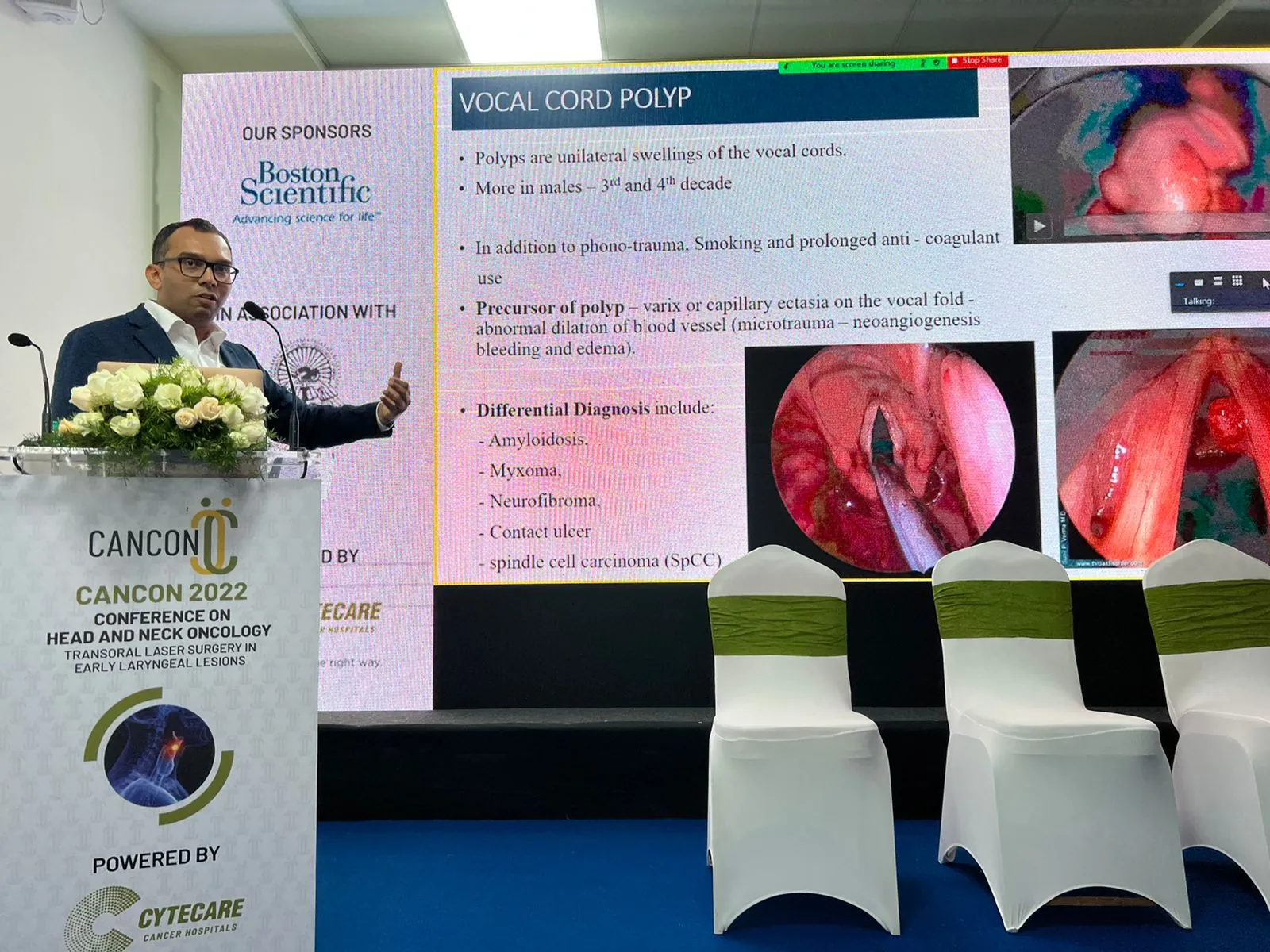
Vocal cord nodules are bilateral callous-like thickenings caused by voice overuse or abuse, common in teachers and singers. Polyps are usually unilateral fluid-filled or hemorrhagic lesions from acute vocal trauma or chronic irritation. Nodules often respond to voice therapy, while polyps typically require microsurgical removal. Both benefit from post-treatment voice therapy to prevent recurrence.

Spasmodic dysphonia is a neurological voice disorder causing involuntary vocal cord spasms, resulting in strained, strangled voice (adductor type) or breathy, effortful voice (abductor type). Treatment primarily involves botulinum toxin (Botox) injections into vocal cord muscles every 3-6 months. Dr. Vidhyadharan provides this specialized treatment with voice therapy support for optimal symptom control.

Voice treatment costs depend on the type of procedure required (diagnostic stroboscopy, microsurgical phonosurgery, injection laryngoplasty, or thyroplasty), anesthesia type, hospital stay duration, and post-operative therapy needs. THANC Hospital and Dr. Vidhyadharan offer comprehensive voice care with advanced videostroboscopy and microsurgical facilities at economical costs. Detailed cost estimates are provided during consultation based on your specific diagnosis.

Success rates are high for appropriately selected patients. Microsurgery for benign lesions (polyps, cysts) achieves 80-90% voice improvement. Vocal cord medialization for paralysis improves voice quality and prevents aspiration in over 90% of cases. Success depends on accurate diagnosis, surgical expertise, compliance with voice rest, and participation in post-operative voice therapy. Dr. Vidhyadharan's microsurgical expertise ensures optimal outcomes.

Have more questions? We're here to help.

Schedule a Consultation
From Our Blog
Vocal Cord Paralysis Treatment Chennai | Nerve Restoration
Voice Disorders

Vocal Cord Paralysis Treatment Chennai | Nerve Restoration

Laryngeal reinnervation offers a promising solution for individuals suffering from vocal cord paralysis. In Chennai, Dr. Vidhyadharan Sivakumar at THANC Hospital specializes in this advanced procedure...

10 min readRead More
Teacher Voice Strain: Hoarseness Treatment Chennai
Voice Disorders

Teacher Voice Strain: Hoarseness Treatment Chennai

Teachers, lecturers, trainers, and call center professionals rely heavily on their voices. But what happens when your most valuable tool starts to fail? **Teacher voice strain**, leading to chronic ho...

11 min readRead More
Vocal Cord Nodules Treatment Chennai | Dr Vidhyadharan
Voice Disorders

Vocal Cord Nodules Treatment Chennai | Dr Vidhyadharan

Vocal cord nodules and polyps can be a significant concern, particularly for professional voice users like singers, teachers, and public speakers. At THANC Hospital in Chennai, Dr. Vidhyadharan Sivaku...

9 min readRead More
Voice Care Tips Chennai Singers | Dr Vidhyadharan
Voice Disorders

Voice Care Tips Chennai Singers | Dr Vidhyadharan

Chennai is a hub for music, from Carnatic traditions to Bollywood influences. For singers and vocal artists in Chennai, maintaining a healthy voice is paramount. This guide, brought to you by Dr. Vidh...

9 min readRead More
Voice Therapy vs Surgery: Chennai Expert Guide
Voice Disorders

Voice Therapy vs Surgery: Chennai Expert Guide

Voice problems can significantly impact your ability to communicate, affecting your personal and professional life. When facing a voice disorder, understanding your treatment options is crucial. Two c...

9 min readRead More
Voice Problems Chennai | When to See a Specialist
Voice Disorders

Voice Problems Chennai | When to See a Specialist

Voice problems such as persistent hoarseness, vocal cord paralysis, and voice fatigue affect thousands of people in Chennai each year. Dr. Vidhyadharan Sivakumar, India's TORS pioneer with 3000+ compl...

8 min readRead More

Restore Your Voice

Don't let voice problems affect your life. Schedule your evaluation at THANC Hospital.