TORS Robotic Surgery Chennai | Dr Vidhyadharan
Need expert consultation? Book an appointment with Dr. Vidhyadharan at THANC Hospital.
Book AppointmentTransoral Robotic Surgery (TORS) represents a major advancement in throat cancer treatment in Chennai. Using the da Vinci Xi robotic system, surgeons can now remove tumors through the mouth with unprecedented precision, eliminating large external incisions. At THANC Hospital, Kilpauk, Chennai, Dr. Vidhyadharan Sivakumar, India's TORS pioneer with European Board certification (FEB-ORL HNS), brings 16+ years of specialist practice to this field, having performed India's first TORS-assisted total laryngectomy in 2022.
What is TORS Robotic Surgery?
TORS uses the da Vinci Surgical System to access and remove throat tumors through the mouth. The surgeon operates from a console, controlling robotic arms equipped with specialized instruments and a high-definition 3D camera. This provides:
- 10x Magnification with crystal-clear 3D vision
- 7 Degrees of Freedom - greater range than the human wrist
- Tremor Elimination - computer-stabilized precision movements
- Superior Depth Perception for navigating complex anatomy
How TORS Differs from Standard Robotic Surgery
While many patients associate robotic surgery with procedures like prostatectomy or knee replacement, TORS is a distinct subspecialty. The da Vinci robot is configured specifically for transoral (through-the-mouth) access, with arms positioned differently than in abdominal or pelvic procedures. The surgeon requires specialized fellowship training in head and neck robotic surgery, it is not enough to be trained in general robotic techniques.
At THANC Hospital, the da Vinci Xi system is configured with specialized curved instruments designed for the tight anatomical corridors of the throat. The 8mm endoscope provides a high-definition 3D view that reveals tissue planes invisible to the naked eye, allowing the surgeon to dissect millimeters from critical nerves and blood vessels with confidence.
Who is a Candidate for TORS?
Suitable Conditions
- Tonsil cancer and base of tongue tumors
- Oropharyngeal cancer (HPV-positive cancers respond excellently)
- Early laryngeal cancer (selected cases)
- Stage I-III tumors accessible through the mouth
- Recurrent benign tumors of the throat (selected cases)
- Residual or recurrent cancer after radiation therapy (salvage TORS)
Patient Requirements
- Adequate mouth opening for robotic arm access (typically ≥2.5 cm inter-incisor distance)
- Fitness for general anesthesia
- Tumor location reachable through oral approach
- No significant trismus (restricted jaw opening) that limits exposure
Who May Not Be Suitable
Not every throat cancer patient is a TORS candidate. Patients with very advanced (T4) tumors extending into the carotid space, those with severe trismus, or patients whose anatomy does not allow adequate robotic access may be better served by traditional open surgery or primary radiation. A thorough evaluation by an experienced TORS surgeon is essential to determine candidacy, this is why seeking a second opinion from a head and neck cancer specialist is valuable before committing to a treatment plan.
TORS vs Traditional Surgery: Key Differences
| Factor | TORS | Traditional Open Surgery |
|---|---|---|
| Incisions | None (through mouth) | External neck incisions |
| Hospital Stay | 2-4 days | 7-14 days |
| Return to Work | 3-4 weeks | 6-12 weeks |
| Return to Normal Diet | 2-3 weeks | 4-8 weeks |
| Scarring | None visible | Visible neck scar |
| Speech Preservation | 90-95% maintain good speech | Higher risk of impairment |
| Swallowing | 90% near-normal function | More significant impact |
| Blood Loss | Minimal | More |
| Complication Rates | Lower | Higher |
TORS vs Radiation Therapy
For early-stage throat cancers, both TORS and radiation are effective. Here's how they compare:
| Factor | TORS | Radiation |
|---|---|---|
| Treatment Duration | Single surgery | 6-7 weeks daily |
| Hospital Stay | 2-4 days | Outpatient |
| Long-term Dry Mouth | Rare | Common (permanent) |
| Taste Changes | Minimal/temporary | Frequent/lasting |
| Dental Problems | Minimal | Increased risk |
| Hypothyroidism Risk | Low | Moderate |
| If Cancer Returns | Radiation available | Re-irradiation difficult |
In many early-stage cases, TORS alone may be sufficient, potentially avoiding radiation and its long-term side effects entirely. Understanding the survival rates and treatment outcomes for head and neck cancer can help patients make informed decisions about their treatment approach.
The Role of HPV in TORS Candidacy
HPV-positive oropharyngeal cancers (primarily affecting the tonsils and base of tongue) have become the most common indication for TORS worldwide. These cancers tend to affect younger, non-smoking patients and carry a significantly better prognosis than HPV-negative cancers, with 5-year survival rates exceeding 85-90%.
For HPV-positive patients with early-stage disease, TORS offers a powerful de-escalation strategy: by achieving complete surgical removal with clear margins, many patients can avoid radiation entirely or receive a lower dose. This is particularly important for younger patients who would otherwise live decades with the long-term side effects of full-dose radiation, including permanent dry mouth, dental deterioration, and swallowing difficulties.
The TORS Procedure at THANC Hospital
Pre-Operative Assessment
- Comprehensive CT/MRI imaging to map tumor extent
- PET-CT scan to rule out distant spread and assess neck nodes
- Flexible laryngoscopy and examination under anesthesia
- HPV/p16 testing for oropharyngeal tumors
- Anesthesia fitness evaluation including airway assessment
- Dental evaluation to address any dental issues before treatment
- Baseline speech and swallowing assessment
- Multidisciplinary tumor board discussion to confirm TORS suitability
- Detailed discussion of risks, benefits, and expected outcomes
During Surgery
- Duration: Typically 2-4 hours (varies with tumor size and complexity)
- General anesthesia with nasotracheal intubation for optimal access
- Mouth retractor positioned to maintain exposure
- Robot docked with 2-3 instrument arms and HD 3D camera
- Surgeon operates from ergonomic console with 10x magnified 3D visualization
- Tumor removed en bloc with precise margins (typically 1 cm or more)
- Frozen section pathology confirms clear margins intraoperatively
- Selective neck dissection performed simultaneously if lymph node involvement is suspected
- Specimen oriented and sent for detailed pathology analysis
Post-Operative Recovery
- Day 0-1: Close monitoring, IV pain management, overnight ICU observation for airway safety
- Day 1-2: Start clear liquids, advance to full liquids, begin mobilization and sitting out of bed
- Day 2-4: Soft diet progression, pain transition to oral medications, discharge planning
- Week 1-2: Gradual diet progression at home, mild throat discomfort improving daily
- Week 2-4: Most patients return to normal or near-normal diet, pain fully resolved
- Week 3-6: Speech and swallowing therapy as needed, return to work for most patients
- Week 6-8: Final pathology-guided decision on need for adjuvant radiation or observation
Real-World Outcomes
Success Rates
- Tumor Control: 85-95% for early-stage cancers
- Voice Preservation: 90-95% maintain good speech
- Swallowing Function: 90% return to near-normal diet
- Quality of Life: Superior to open surgery or radiation alone
Long-Term Benefits
- Lower risk of chronic complications
- Better long-term swallowing function
- Reduced need for feeding tubes
- No visible external scars
- Radiation remains available if needed later
Potential Complications
Common (Usually Temporary)
- Throat pain and discomfort
- Temporary difficulty swallowing
- Mild taste changes
- Tongue numbness (if tongue base involved)
Uncommon (1-2%)
- Bleeding requiring intervention
- Infection
- Temporary feeding tube requirement
Rare
- Prolonged swallowing difficulty
- Permanent voice changes
- Emergency tracheostomy need
Dr. Vidhyadharan's TORS Expertise
Dr. Vidhyadharan Sivakumar brings exceptional, verified credentials to robotic surgery:
Qualifications
- MCh (Head & Neck Surgery) - Amrita Institute
- MS (Otorhinolaryngology) - Gold Medal, First Mark - Annamalai University (2009)
- ASOHNS Clinical Fellowship - Royal Adelaide Hospital, Australia (2016-17)
- Fellow, European Board of Otorhinolaryngology (FEB-ORL HNS, 2018)
- Fellow, Indian College of Robotic Surgeons (FICRS)
- Co-Editor of "Comprehensive Management of Head and Neck Cancer" (Jaypee Brothers, 2021)
- 40+ peer-reviewed publications including The Laryngoscope
- 16+ years specialist practice | 3000+ complex surgeries
Verified Achievements
- Team Leader for India's First TORS-assisted Total Laryngectomy (2022)
- Member of World's First Endo-Robotic Surgery Team for post-cricoid cancer (VPS Lakeshore Hospital, Kochi, 2023)
- Co-Editor of Comprehensive Management of Head and Neck Cancer (Jaypee Brothers Medical Publishers, 2021)
THANC Hospital Facilities
- Latest da Vinci Xi Robotic System
- Dedicated robotic surgery OR staff
- Comprehensive speech and swallowing therapy
- Multidisciplinary oncology coordination
Life After TORS: What Patients Can Expect
Most TORS patients are pleasantly surprised by how quickly they recover compared to expectations. Within the first week, the surgical site in the throat begins healing, and throat soreness progressively decreases. By 2-3 weeks, the majority of patients are eating a normal or near-normal diet.
Swallowing Rehabilitation
Some patients, particularly those who undergo TORS for base of tongue tumors, benefit from targeted swallowing exercises. A speech-language pathologist will work with you to optimize swallowing safety and efficiency. Exercises may include tongue strengthening, effortful swallowing practice, and strategies to prevent aspiration. Most patients achieve excellent long-term swallowing function, over 90% return to a near-normal diet without the need for permanent dietary modifications.
Speech and Voice
Voice quality after TORS depends on the tumor location. Patients with tonsil tumors typically notice minimal voice changes. Those with tongue base tumors may experience temporary changes in resonance, which usually improve within weeks. Unlike traditional open surgery, TORS preserves the external neck structures, meaning patients avoid the significant voice and swallowing deficits associated with mandibulotomy approaches.
Follow-Up Protocol
After TORS, patients undergo structured surveillance to monitor for recurrence:
- First 2 years: Clinic visits and flexible laryngoscopy every 2-3 months
- Years 2-5: Visits every 4-6 months
- After 5 years: Annual surveillance
- Imaging (CT/MRI or PET-CT) is performed periodically based on clinical findings and risk assessment
Is TORS Right for You?
If you've been diagnosed with throat, tonsil, or tongue base cancer, TORS may be an excellent option. The ideal time to explore this is during your initial consultation, before starting any treatment.
Questions to Ask
- Am I a candidate based on my tumor location and stage?
- Would TORS alone be sufficient, or will I need radiation?
- What are the expected functional outcomes for my specific case?
- How many TORS procedures has my surgeon performed?
Related Resources
- Head & Neck Cancer Survival Rates and Modern Treatment
- Why You Should Seek a Second Opinion for Head and Neck Cancer
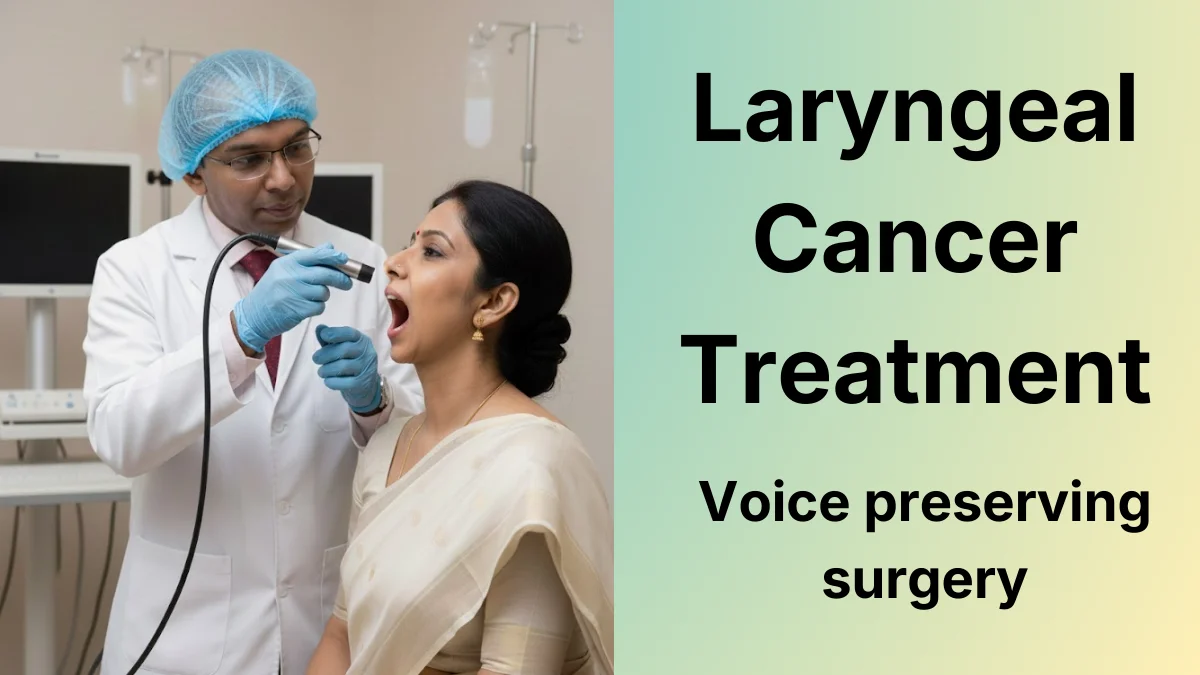
- Throat Cancer Treatment and Voice-Preserving Surgery
- HPV and Oropharyngeal Cancer
- TORS vs Traditional Surgery: Detailed Comparison
- Robotic Surgery Specialty Page
Ready to explore if TORS is right for you? Schedule a consultation with Dr. Vidhyadharan at THANC Hospital, Chennai. Patients from Anna Nagar, Kilpauk, Nungambakkam, T. Nagar, and across Tamil Nadu trust THANC Hospital for robotic surgery.
Phone: +91 73059 53378 Location: THANC Hospital, 747 Poonamallee High Road, Kilpauk, Chennai 600010 Book an Appointment
References
- O'Malley BW Jr, et al. "Transoral robotic surgery (TORS): a new approach to upper airway lesions." The Laryngoscope, 2006.
- Weinstein GS, et al. "Transoral robotic surgery: a multicenter study to assess feasibility, safety, and surgical margins." The Laryngoscope, 2007.
- National Comprehensive Cancer Network (NCCN). "Head and Neck Cancers." NCCN Guidelines, 2024.
- American Cancer Society. "Throat Cancer Treatment Options." 2024.
- Genden EM, et al. "Transoral robotic surgery for head and neck cancer: a prospective review." Head & Neck, 2011.
- Cleveland Clinic. "Transoral Robotic Surgery (TORS)." 2024.

Authored by
Dr. Vidhyadharan Sivakumar
MCh (Head & Neck Surgery), FEB-ORL HNS, MS (ENT) Gold Medal
Clinical Director & Senior Consultant at THANC Hospital, Chennai. Co-Editor of "Comprehensive Management of Head and Neck Cancer" (2021) with 40+ publications. Team Leader for India's first TORS-assisted Total Laryngectomy (2022). 16+ years experience with over 3000 complex surgeries.